Introduction: Understanding How to Cite a Website and Its Importance
In today’s digital age, websites are a primary source of information for academic papers, blog posts, and research projects. Learning how to cite a website properly ensures you give credit to original authors, avoid plagiarism, and maintain the integrity of your work. Whether you’re a student tackling an essay, a researcher compiling data, or a blogger referencing online articles, mastering website citation is essential.
Proper citation isn’t just a formality—it’s a cornerstone of ethical writing. It allows readers to trace your sources, verify facts, and explore further. Without it, you risk academic penalties or damaging your credibility. Styles like APA, MLA, and Chicago each have unique rules for website citations, tailored to different fields such as psychology, humanities, or history.
This guide breaks down everything you need to know about how to cite a website, from gathering details to handling tricky cases like missing authors. We’ll provide step-by-step instructions, real-world examples, and tips to make the process straightforward.
Featured Snippet Definition: Citing a website means formatting references to online sources in your bibliography or works cited list, including elements like author, title, date, site name, and URL. This practice upholds academic honesty, prevents plagiarism, and follows style guides like APA, MLA, or Chicago for clear, consistent documentation. (52 words)
For more on building strong research skills, check out our related article on effective academic writing techniques.
What Information You Need Before Citing a Website
Before diving into specific styles, gather key details from the website. This preparation makes website citation smoother and more accurate.
- Author or Organization: Look for the writer’s name or the publishing entity. It’s often at the top, bottom, or in an “About” section.
- Title of the Page or Article: Use the specific page title, not the site’s main name.
- Publication or Update Date: Check for a posted or last updated date. If absent, note that.
- Website Name: The overall site’s title, like “Wikipedia” or “BBC News.”
- URL: Copy the full web address, but omit “https://” if the style allows.
- Access Date: Some styles require when you viewed the page, especially for changeable content.
- DOI (if available): Digital Object Identifiers for stable links, common in academic sites.
Scan the page thoroughly—details might be in footers or metadata. Tools like browser extensions can help extract this info quickly.
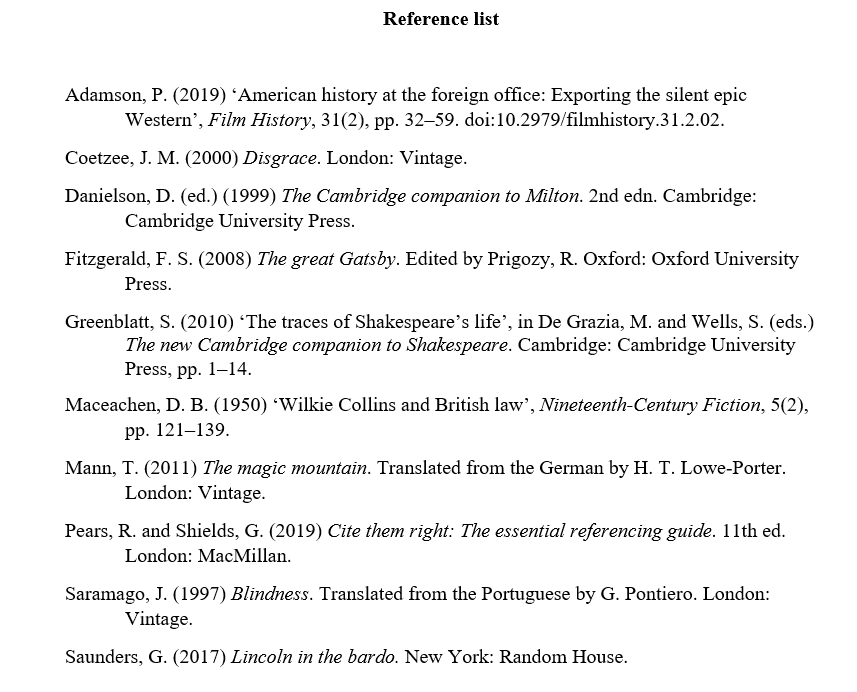
Here’s an example reference list to visualize how these elements come together.
How to Cite a Website in APA Style
APA style, popular in social sciences, emphasizes recency and clarity in APA website citation. Follow these steps for the 7th edition.
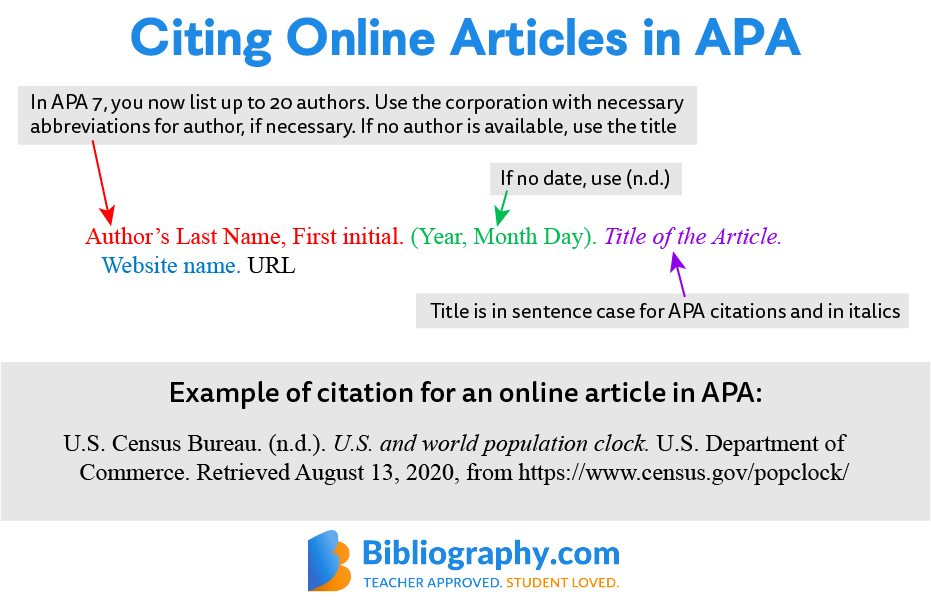
- Identify Elements: Author last name, first initial. (Year, Month Day). Title of the webpage. Site Name. URL
- Format the Reference: List in alphabetical order in your reference list.
- Handle Variations: If no author, start with the title. If no date, use (n.d.).
Example for a standard website:
Smith, J. (2024, March 15). The impact of climate change on oceans. National Geographic. https://www.nationalgeographic.com/environment/article/climate-change-oceans
For an organization as author:
World Health Organization. (2025). Mental health in the workplace. https://www.who.int/mental-health/workplace/en/
In your paper, the reference list appears at the end, double-spaced with hanging indents.
Table: APA Website Citation Elements
| Element | Example | Notes |
|---|---|---|
| Author | Smith, J. | Use initials |
| Date | (2024, March 15) | Full date if available |
| Title | The impact of climate change on oceans | Italicize |
| Site Name | National Geographic | Not italicized |
| URL | https://www.nationalgeographic.com/… | No period at end |
This structure keeps your APA website citation precise. For deeper dives, see our guide on APA formatting basics.
How to Cite a Website in MLA Style
MLA style, used in humanities, focuses on authorship and accessibility in MLA website citation. Here’s the 9th edition breakdown.
- Gather Details: Author. “Title of the Page.” Website Name, Publisher (if different), Publication Date, URL.
- Assemble the Entry: End with a period after each element except the URL.
- Works Cited Placement: Alphabetize by author’s last name or title.
Standard example:
Johnson, Emily. “Exploring Ancient Rome.” History.com, A&E Television Networks, 10 Feb. 2023, www.history.com/topics/ancient-rome.
If the publisher matches the site name, omit it:
“Global Warming Facts.” NASA, 5 Jan. 2026, climate.nasa.gov/evidence/.
Use containers for nested content, like articles within sites.
Bullet Points for Quick MLA Tips:
- Italicize website names.
- Abbreviate months longer than four letters (e.g., Feb.).
- Include access date if content changes frequently: Accessed 2 Jan. 2026.
This method ensures your MLA website citation is reader-friendly. Related reading: Our post on MLA paper formatting.

How to Cite a Website in Chicago Style
Chicago style offers flexibility with notes-bibliography (humanities) or author-date (sciences) systems for Chicago website citation. We’ll cover both in the 17th edition.
For Notes-Bibliography:
- Footnote: Author First Last, “Title,” Website, Month Day, Year, URL.
- Bibliography: Author Last, First. “Title.” Website. Month Day, Year. URL.
Example Footnote:
- Alex Rivera, “Urban Planning Trends,” CityLab, December 20, 2025, https://www.citylab.com/design/2025/12/urban-trends.
Bibliography: Rivera, Alex. “Urban Planning Trends.” CityLab. December 20, 2025. https://www.citylab.com/design/2025/12/urban-trends.
For Author-Date:
In-text: (Rivera 2025) Reference: Rivera, Alex. 2025. “Urban Planning Trends.” CityLab, December 20. https://www.citylab.com/design/2025/12/urban-trends.
Key Differences:
- Notes use superscript numbers.
- Access dates: “Accessed January 2, 2026” for unstable content.
Chicago’s adaptability suits varied projects. Explore more in our Chicago style overview.

How to Cite a Website with No Author or No Date
Missing info is common in website citation. Here’s how to handle it across styles.
- No Author: Start with the title. In APA: Title. (Year). Site Name. URL Example: The History of the Internet. (n.d.). Britannica. https://www.britannica.com/technology/Internet-history.
- No Date: Use “n.d.” in APA/MLA, or estimate in Chicago. MLA Example: “Quantum Computing Basics.” IBM Research, www.ibm.com/quantum-computing.
- Both Missing: Combine approaches. Always check for hidden metadata.
These adjustments keep your references credible.
In-Text Citations Explained
In-text citations link your text to the full reference, varying by style.
- APA: (Author, Year) or (Author, Year, p. #) for quotes. Example: As noted (Smith, 2024), climate impacts are severe.
- MLA: (Author Page) – page optional for web. Example: Urban trends evolve rapidly (Rivera).
- Chicago Notes: Superscript¹ leads to footnote. Author-Date: (Author Year).
Use them sparingly but effectively to support claims.
Common Citation Mistakes to Avoid
Even experienced writers err in how to cite a website. Watch for:
- Forgetting URLs or using shortened ones.
- Misplacing italics (e.g., title vs. site name).
- Ignoring updates—recite if content changes.
- Keyword stuffing in references.
- Not alphabetizing lists.
Proofread your reference list examples twice.
Tools That Help You Cite Websites Correctly
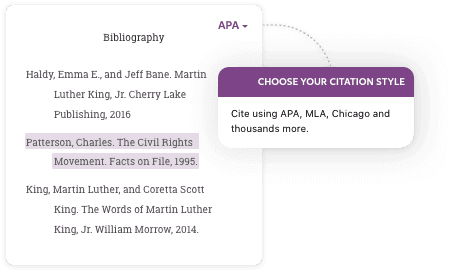
Automate with these free tools for accurate website citation:
- Citation Machine: Generates APA, MLA, Chicago formats instantly.
- Zotero: Manages sources and exports bibliographies.
- EasyBib: User-friendly for students.
- Google Scholar: Built-in citation buttons.
Always double-check outputs.
FAQs about How to Cite a Website
What if the website has multiple authors? List up to 20 in APA; use et al. after the first in MLA.
Do I cite social media as websites? Yes, but specify platform (e.g., Twitter post).
How to cite PDFs from websites? Treat as web if online-only; as book if published.
Is DOI better than URL? Prefer DOI for stability in APA/MLA.
Can I use citation generators for everything? They’re helpful but verify for accuracy.
What’s the difference between APA and MLA for websites? APA stresses dates; MLA emphasizes containers.
Conclusion with Best Practices
Mastering how to cite a website boosts your writing’s professionalism and reliability. Always gather complete info, follow style-specific rules, and use tools wisely. Practice with real examples, and soon it’ll become second nature. For ongoing tips, visit our academic formatting articles. Remember, ethical citation builds trust—start applying these today!
Leave a Reply